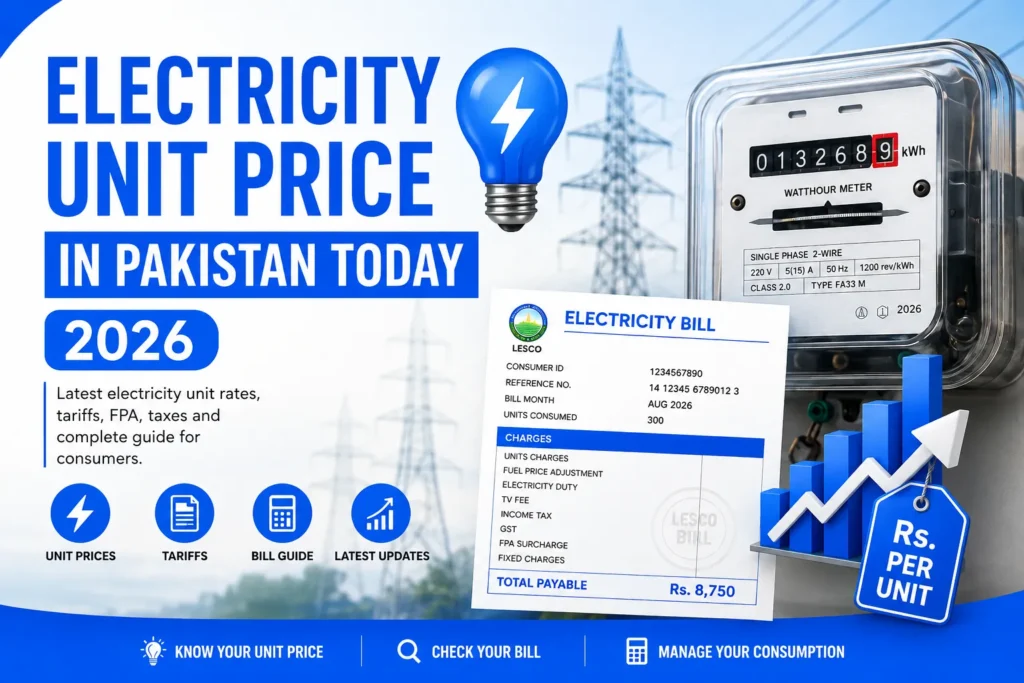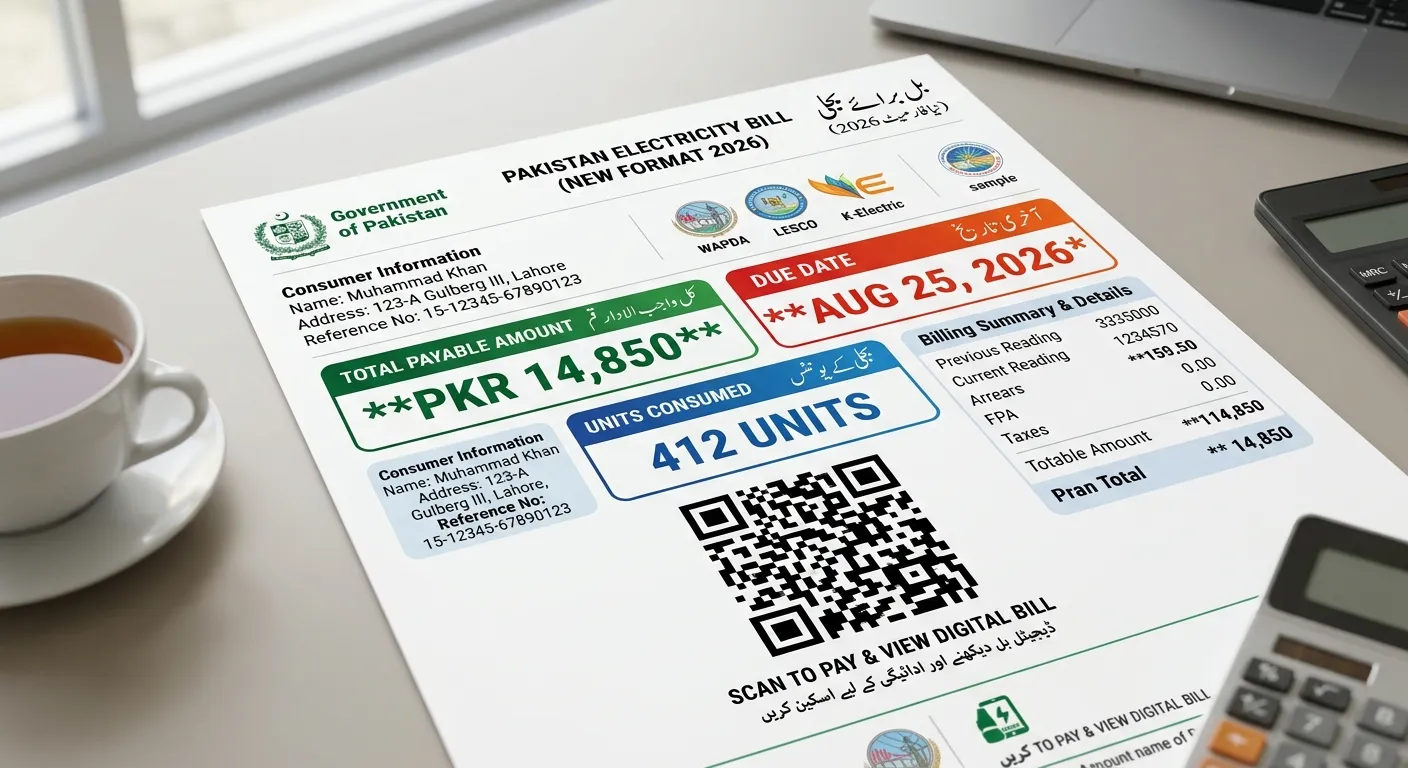
Pakistan’s electricity consumers are beginning to see a redesigned electricity bill format introduced under the Ministry of Energy (Power Division), with the new layout intended to make bills easier to read and understand.
For more information about electricity-sector policies and government initiatives, learn more about the Power Division’s official updates.
The change does not represent a new electricity tariff by itself. Instead, the focus is on how billing information is presented. Important details such as electricity consumption, the amount payable, due date and other billing information are being given a clearer and more organised presentation.
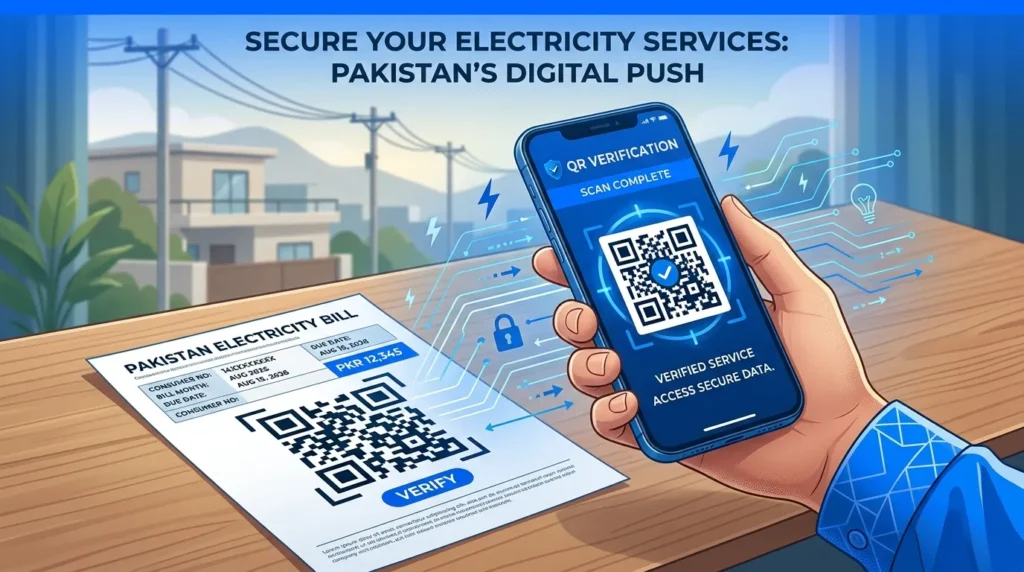
The redesigned format also introduces QR codes, giving consumers a way to access additional information and digital services. The change follows complaints about the older bill layout, which many consumers considered difficult to understand because of the amount of technical and billing information displayed together.
For consumers, the biggest question is not simply what the new bill looks like, but where to find the information that matters most and whether the redesigned format changes the amount they have to pay.
What Is the New Electricity Bill Format?
The new electricity bill format is a redesigned presentation of electricity billing information being introduced by Pakistan’s power distribution companies (DISCOs).
The Ministry of Energy’s initiative focuses on making bills more:
- Clear
- Readable
- Structured
- Consumer-friendly
- Easier to understand
Under the previous layout, consumers could encounter a large amount of technical information, charges, taxes and other details in a relatively crowded presentation. This sometimes made it difficult to identify the most important figures quickly.
The redesigned format attempts to solve that problem by giving greater prominence to key billing information.
Among the details consumers are expected to find more easily are:
- Total amount payable
- Due date
- Electricity units consumed
- Billing information
- Relevant charges
- QR code and digital access options
For additional coverage of the new electricity bill format, PTV News also shared an update on the redesigned electricity bill and its rollout for consumers.
Why Has Pakistan Introduced a New Electricity Bill Design?
The change comes after complaints and feedback from electricity consumers and other stakeholders about the presentation of traditional electricity bills.
For many households, the biggest difficulty was not necessarily receiving the bill but understanding it.
An electricity bill can contain several different components, including consumption-related charges, government taxes, adjustments, surcharges and other billing information. When these details are presented together without clear visual separation, consumers may struggle to determine why their final payable amount is higher than the basic energy cost.
The new design is intended to make the information easier to locate and understand.
This is particularly relevant for consumers who want to check their bill before making a payment or compare their current electricity usage with previous months.
The changes are part of wider efforts to improve consumer-facing electricity services and billing information. Learn more about Pakistan’s power-sector policies and reforms from the Ministry of Energy.
What Is Different About the New Electricity Bill?
The most visible change is the layout and organisation of information.
Instead of presenting a large amount of information in a crowded format, the redesigned bill gives greater attention to the figures consumers usually want to find first.
Key information is easier to identify
The new design gives greater prominence to information such as:
- Amount payable
- Payment due date
- Units consumed
- Billing details
- Consumer information
- Additional digital services
This means consumers should be able to locate essential information without having to examine every part of the bill first.
The bill has a simpler visual structure
The redesigned presentation reduces visual complexity and reorganises information into a more accessible format.
This can be particularly useful for consumers who are unfamiliar with electricity billing terminology.
QR codes have been added
Another notable feature is the use of QR codes.
The codes are intended to provide easier access to supplementary information and digital services. The exact services available through a QR code can depend on the relevant electricity distribution company and the implementation of its digital facilities.
Consumers should therefore follow the instructions provided with the bill and use official services when accessing billing information.
Does the New Electricity Bill Format Mean Electricity Prices Have Changed?
No. A change in bill design should not be confused with a change in electricity tariffs.
The redesigned format is primarily a change in the presentation of billing information.
Your final electricity bill can still depend on several factors, including:
- Electricity units consumed
- Applicable tariff category
- Government taxes
- Surcharges
- Adjustments
- Other applicable billing components
Therefore, receiving a bill in the new format does not by itself mean that the electricity tariff has increased or decreased.
If the amount on a new bill is higher than a previous bill, consumers should examine the actual consumption, applicable rates, taxes, adjustments and other charges rather than assuming that the redesigned format caused the increase.
The bill format itself should not be confused with changes in electricity tariffs. Learn more about electricity tariffs, regulatory decisions and consumer matters from NEPRA, the National Electric Power Regulatory Authority.
Which Electricity Companies Are Using the New Bill Format?
The redesigned format is being introduced across Pakistan’s electricity distribution network in stages.
Based on the information released during the initial rollout, LESCO, GEPCO and MEPCO had started issuing bills using the new format, while IESCO was expected to adopt it shortly afterward.
Other distribution companies were also making arrangements for implementation.
The rollout may therefore not appear simultaneously for every electricity consumer across the country. The appearance of a bill can depend on the distribution company serving a particular area and the stage of its implementation.
The timing of implementation can differ between distribution companies. Learn more about Pakistan’s electricity distribution and regulatory framework through NEPRA’s official resources.
New Electricity Bill Format and LESCO Consumers
LESCO consumers may notice changes in the appearance and organisation of their electricity bills as the redesigned format is implemented.
The most important details to check remain the same:
1. Consumer information
Check the information identifying your electricity connection.
Depending on the bill, this can include information such as:
- Consumer name
- Service address
- Reference information
- Consumer identification details
- Tariff category
- Connection information
If important personal or connection details appear incorrect, consumers should contact LESCO through its appropriate customer service or complaint channel.
For connection-related information, billing services and official customer support, consumers should use LESCO’s own channels. Learn more about LESCO services on the official LESCO website.
2. Electricity consumption
Look for the section showing your electricity usage.
Your bill can include information associated with the meter reading and consumption period. Comparing the present reading and previous reading can help you understand how the reported units were calculated.
If your consumption appears unusually high, compare it with earlier bills before assuming there is a billing error.
3. Charges and adjustments
The bill can contain more than the basic cost of electricity consumed.
Depending on the consumer category and applicable billing rules, different charges or adjustments may appear.
This is one reason the redesigned layout is important: clearer organisation can make it easier for consumers to distinguish different parts of the bill.
4. Taxes and government charges
Electricity bills can also include applicable government taxes and duties.
The amount and type of these charges can vary depending on the consumer category and applicable rules.
Consumers should therefore distinguish between the electricity consumption cost and the additional taxes, duties, surcharges or other applicable charges when reviewing the final amount.
5. Amount payable
The total amount that needs to be paid should be one of the easiest figures to locate on the redesigned bill.
Always check the payable amount before making a payment.
6. Due date
The due date is another important part of the bill.
Paying after the specified deadline may result in additional charges according to the applicable billing rules.
For this reason, consumers should check the due date every month rather than relying on the date from their previous bill.
Why Can an Electricity Bill Be Much Higher Than the Basic Unit Cost?
One of the common sources of confusion surrounding electricity bills is the difference between the energy charge and the final payable amount.
A consumer may calculate the approximate cost of their electricity units and find that the final bill is considerably higher.
That does not necessarily mean the meter reading is wrong.
The final bill can contain several components in addition to the basic energy charge. Depending on the consumer and applicable rules, these can include taxes, duties, surcharges and adjustments.
This distinction is especially important when discussing the new bill format.
The purpose of clearer formatting is partly to help consumers understand that the final payable amount can consist of multiple billing components rather than simply being the number of units multiplied by one rate.
Can the New Bill Help Consumers Understand Taxes?
The redesigned presentation is intended to make billing information easier to understand, but consumers should still examine the individual components of their bill carefully.
Electricity distribution companies collect certain government-imposed taxes and charges through electricity bills.
Depending on the applicable category and rules, these may include different forms of:
- Sales tax
- Income tax
- Electricity duty
- Additional or special taxes
- Surcharges
- Other government-approved charges
The exact components can vary.
Therefore, consumers should not assume that every electricity bill contains exactly the same taxes or charges.
Because taxes and electricity charges can depend on applicable rules and consumer categories, the exact amount should always be checked on the bill. Learn more about electricity regulation and applicable consumer-related matters from NEPRA.
What Is the QR Code on the New Electricity Bill?
The QR code is one of the notable additions to the redesigned bill.
It is intended to provide a convenient way for consumers to reach supplementary information and digital services.
Instead of requiring consumers to manually search for a particular online service, a QR code can provide a direct digital route when supported by the relevant distribution company.
Consumers should scan QR codes only when they appear on their official electricity bill and should check that any payment or information page they access belongs to an official or trusted service.
Consumers should always verify the destination of a QR code before entering personal or payment information. Learn more about official electricity services through your relevant distribution company.
Is the Reference Number Changed Because of the New Format?
A redesigned bill should not be treated as a new electricity connection.
For consumers whose identification details remain unchanged, the existing reference or consumer identification information continues to be important for accessing billing services.
If you normally use your reference number or consumer ID to check your electricity bill online, keep using the information associated with your connection unless your distribution company specifically informs you of a change.
The appearance of the bill and the identity of the electricity connection are two different things.
How to Check Your New Electricity Bill
Consumers who receive the redesigned bill can use a simple checking process.
Step 1: Confirm your identity details
Check your name, address and connection information.
Step 2: Check the meter information
Compare the current consumption with your previous bill where possible.
Step 3: Check total units
Look at the number of units billed during the relevant period.
Step 4: Review the charges
Do not look only at the final amount. Review the main billing components shown on the bill.
Step 5: Check taxes and adjustments
Look for applicable taxes, duties, surcharges and adjustments.
Step 6: Confirm the due date
Make sure you know the deadline for payment.
Step 7: Verify the final payable amount
Check the amount due before completing your payment.
What Should You Do If the New Bill Looks Wrong?
A different design does not automatically mean that a bill contains an error.
If something appears unusual, first compare the new bill with previous bills.
Pay particular attention to:
- Meter readings
- Units consumed
- Billing period
- Consumer information
- Tariff category
- Applicable charges
- Taxes
- Adjustments
- Due date
If you identify a genuine discrepancy, contact the relevant electricity distribution company through its official complaint or customer service process.
Avoid relying on social media posts alone when deciding whether a bill is incorrect. Electricity billing can involve multiple components, and an apparently unusual total may have a specific explanation within the bill.
New vs Old Electricity Bill Format
| Feature | Earlier Presentation | Redesigned Presentation |
|---|---|---|
| Overall layout | More information-heavy | More structured |
| Payable amount | Could be harder to locate | Given greater prominence |
| Due date | Included among billing information | Presented more clearly |
| Consumption | Included in detailed bill information | Easier to identify |
| Information layout | More crowded | Simplified |
| Digital access | More limited visually | QR code incorporated |
| Consumer readability | Could be difficult for some users | Designed for easier understanding |
The comparison above concerns the presentation of information, not a change to the underlying electricity tariff.
Does the New Format Change How Your Electricity Bill Is Calculated?
The format itself does not change the basic principle of electricity billing.
Your bill can continue to depend on factors such as:
Consumption + applicable tariff + taxes + adjustments + other applicable charges = final payable amount
However, the exact calculation can differ according to consumer category, tariff structure and applicable government or regulatory measures.
This is why consumers should use the actual bill as the final source for the amount payable rather than trying to estimate the total from the unit rate alone.
What Consumers Should Pay Attention to Every Month
Regardless of whether you receive an old-style or redesigned bill, there are several figures worth checking regularly.
Electricity units
A sudden increase in consumption can have a significant effect on the bill.
Meter readings
Comparing current and previous readings can help identify unusual consumption.
Tariff category
Make sure your connection is being billed under the appropriate category.
Taxes and additional charges
Look beyond the basic electricity charge when checking the final amount.
Due date
A missed deadline can lead to additional payment obligations.
Previous bill comparison
Comparing two or three months of bills can make unusual changes easier to identify.
Why the New Format Matters for Consumers
An electricity bill is more than a payment request. It also provides information about how a consumer’s electricity usage and financial obligation have been recorded.
A clearer layout can make it easier to:
- Understand monthly consumption
- Identify the amount payable
- Find the payment deadline
- Review billing components
- Compare current and previous usage
- Access digital services
- Spot information that may require clarification
This can be particularly helpful for households where one person normally receives the bill but another family member handles the payment or household budgeting.
Will Every Consumer Receive the New Format Immediately?
Not necessarily.
The implementation is being carried out by electricity distribution companies, and different DISCOs may introduce the redesigned format at different stages.
Therefore, consumers should not assume that an older-looking bill is automatically invalid or that every electricity company must issue exactly the same version at the same time.
The transition can take place progressively as individual distribution companies complete the necessary arrangements.
Important Point About the New Bill Design
The redesigned format should not be interpreted as proof that electricity bills have become cheaper or more expensive.
Its primary purpose is better presentation of information.
If your bill has increased, the reason should be investigated through the actual billing details, such as:
- Higher consumption
- Applicable tariff
- Taxes
- Surcharges
- Adjustments
- Other charges
The new design itself is not a substitute for checking these details.
What This Change Means for LESCO Bill Checking
For people who regularly check their LESCO electricity bills online, the redesigned format may make it easier to recognise the most important information once the new layout appears.
When checking an online bill, consumers should focus on the same core details:
- Reference or consumer information
- Billing period
- Units consumed
- Meter readings
- Charges
- Taxes and adjustments
- Total payable amount
- Due date
Understanding these elements can make online bill checking more useful because consumers can compare their current bill with previous records instead of looking only at the final amount.
Frequently Asked Questions
What is the new electricity bill format in Pakistan?
The new electricity bill format is a redesigned layout introduced under the Ministry of Energy’s consumer-focused reform initiative. It reorganises important billing information to make electricity bills easier to read and understand.
Has the new bill format increased electricity tariffs?
No. The redesign itself is a change in the presentation of the bill. Electricity charges continue to depend on applicable tariffs, consumption and other relevant billing components.
Why has the electricity bill format been changed?
The format was redesigned following complaints and feedback that the previous bill layout was crowded and difficult for some consumers to understand.
What information is highlighted on the new electricity bill?
Important information such as electricity consumption, the amount payable and due date is presented more clearly. The redesigned bill also includes QR-code functionality for access to supplementary information and digital services.
What is the QR code on the new electricity bill for?
The QR code is intended to make it easier for consumers to access additional billing information and digital services provided through the relevant electricity distribution company.
Which companies have started using the new electricity bill format?
During the initial rollout, LESCO, GEPCO and MEPCO had begun issuing bills under the redesigned format. IESCO was also expected to adopt the format, while other distribution companies were preparing for implementation.
Will my electricity bill still contain taxes?
Applicable taxes and government charges can still form part of the final electricity bill. The redesigned format changes the presentation of billing information rather than eliminating applicable taxes.
Has my electricity reference number changed because of the new format?
A change in the visual design of an electricity bill does not by itself change the identity of your electricity connection. Consumers should continue using the reference or consumer information associated with their connection unless their distribution company officially advises otherwise.
Why is my new electricity bill higher than the amount I calculated from my units?
The final payable amount can include more than the basic energy charge. Depending on the applicable billing rules, taxes, duties, surcharges, adjustments and other charges can contribute to the final amount.
What should I do if I think my new electricity bill is incorrect?
First compare the meter readings, units consumed, billing period, tariff category and other charges with previous bills. If you still believe there is an error, contact your relevant electricity distribution company through its official complaint or customer support channel.
Final Takeaway
Pakistan’s new electricity bill format is primarily a change designed to make electricity bills easier for consumers to understand. The redesigned layout gives greater visibility to important information such as consumption, payable amount and due date while also introducing QR-code access to digital services.
For consumers, the most useful approach is to look beyond the final figure. Check your units, meter readings, billing period, tariff category, taxes, adjustments and other charges before making a payment.
The rollout is taking place across the country’s distribution companies, so the exact appearance and timing of the new bill can vary between DISCOs.
As the redesigned format becomes more common, understanding where to find the important information can help consumers review their bills more confidently and identify questions that may need clarification.